
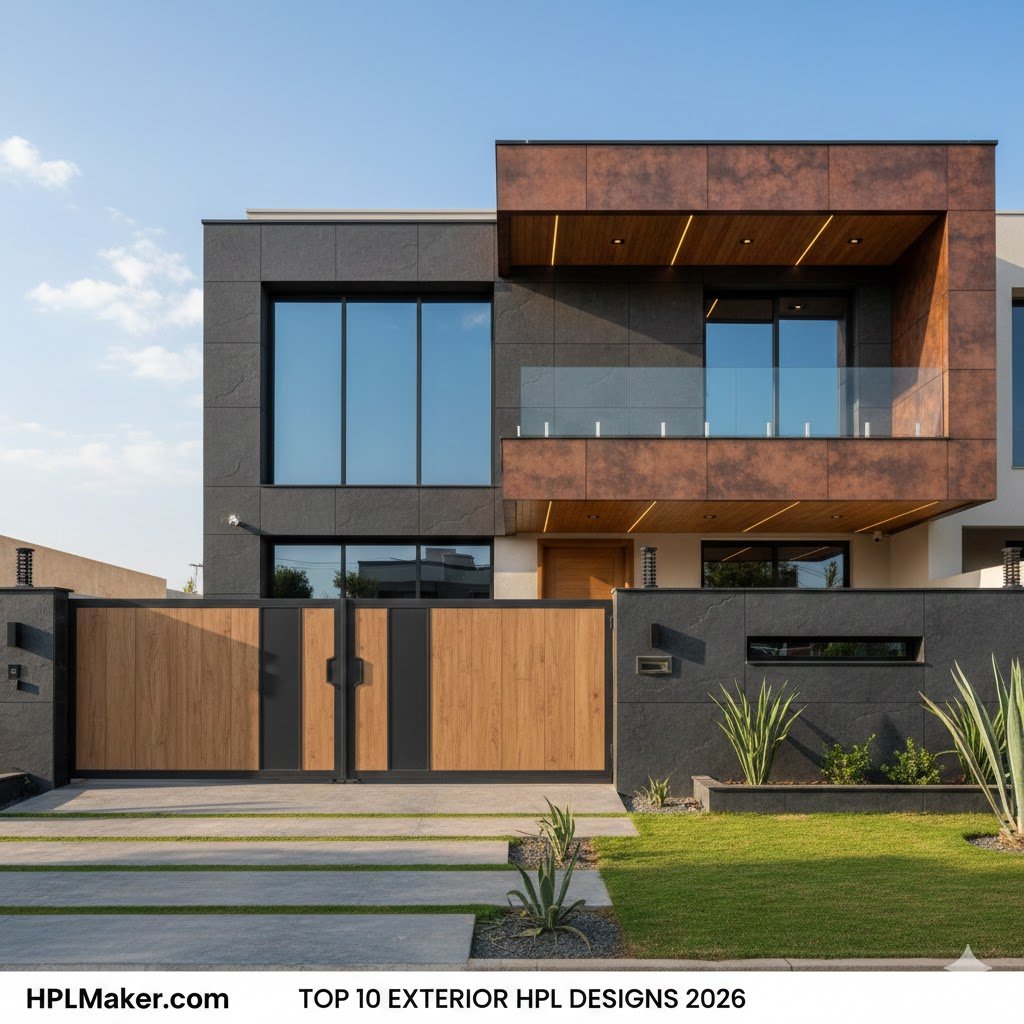
Architecture in 2026 is driven by performance, sustainability, and long-term value—not just visual appeal. Because of this shift, architects across residential, commercial, and institutional projects are increasingly recommending HPL sheets for exterior applications.
Let’s explore the key reasons behind this growing preference.
Architects Think Beyond Appearance
Architects are responsible for:
- Structural safety
- Material performance
- Lifecycle cost
- Client satisfaction over decades
Materials that fail early create design and reputation risks. HPL sheets help reduce those risks.
Reliable Performance in Real-World Conditions
HPL sheets are engineered to perform under:
- Intense sunlight
- Heavy rainfall
- Temperature fluctuations
- Pollution and dust
Architects prefer materials that behave predictably after installation.
Design Freedom Without Compromise
Modern architecture demands flexibility.
HPL sheets offer:
- Wood, stone, metallic, and solid finishes
- Matte and textured surfaces
- Large panel sizes for clean elevations
This allows architects to experiment while maintaining structural reliability.
Consistency Across Large Projects
Uniformity is critical for apartments, offices, and commercial complexes.
HPL sheets:
- Maintain consistent shade and texture
- Avoid patchwork issues seen with paint
- Preserve design intent across elevations
This ensures design accuracy even years later.
Low Maintenance = Happy Clients
Clients often underestimate maintenance costs.
Architects recommend HPL sheets because they:
- Eliminate repainting cycles
- Require only simple cleaning
- Reduce long-term facade expenses
Satisfied clients mean repeat projects and referrals.
Faster Execution on Site
Construction delays impact design schedules.
HPL cladding systems:
- Enable faster facade completion
- Reduce on-site finishing work
- Support tight project timelines
This makes project coordination easier for architects.
Compatibility With Sustainable Design Goals
Sustainability is now a design standard.
HPL sheets:
- Reduce material replacement frequency
- Lower resource consumption over time
- Support long-lasting building envelopes
Architects value materials that align with green building principles.
Safety and Structural Confidence
Exterior safety is non-negotiable.
Properly installed HPL systems:
- Use mechanical fixing
- Reduce risks of cracking or falling
- Perform well in high-rise structures
This improves facade safety and reliability.
Trusted by Professionals Worldwide
Architects rely on consistent quality.
Brands like HPLMaker are preferred because they offer:
- Exterior-grade HPL sheets
- Reliable bulk supply
- Finishes suitable for modern architecture
This ensures dependable results on large and small projects alike.
Where Architects Commonly Specify HPL Sheets
- Villas and premium homes
- Apartment buildings
- Commercial offices
- Hospitals and educational institutions
Versatility is a major reason for adoption.
Final Thoughts: A Material Architects Can Trust
In 2026, architects recommend materials that:
- Perform reliably
- Minimize future issues
- Enhance design flexibility
- Deliver long-term value
HPL sheets meet these expectations, making them a preferred exterior solution for modern architecture.